Properties Cleared for Building or Restoration
Brush Clearing & Land Clearing in Monticello and surrounding areas for overgrown lots, construction sites, and properties requiring vegetation removal before development
Overgrown properties accumulate brush, saplings, and invasive species that obscure boundaries and complicate site surveys. Lorentz Tree Service LLC handles brush removal and land clearing in Monticello for residential lots, commercial parcels, and properties transitioning from neglect to active use. Small tree removal targets saplings and volunteer growth under six inches in diameter, while brush clearing eliminates undergrowth, thickets, and vines that prevent access and hide ground conditions.
Lot clearing prepares properties for construction by removing vegetation down to bare ground, exposing grade elevations and subsurface obstacles before excavation begins. Property cleanup addresses accumulations from years of unchecked growth, cutting back to property lines and eliminating fire hazards from dead brush. The process involves cutting, chipping, and hauling debris off-site, leaving cleared areas ready for grading, seeding, or immediate construction activity.
Arrange an on-site consultation to evaluate vegetation density and determine equipment access for efficient clearing.
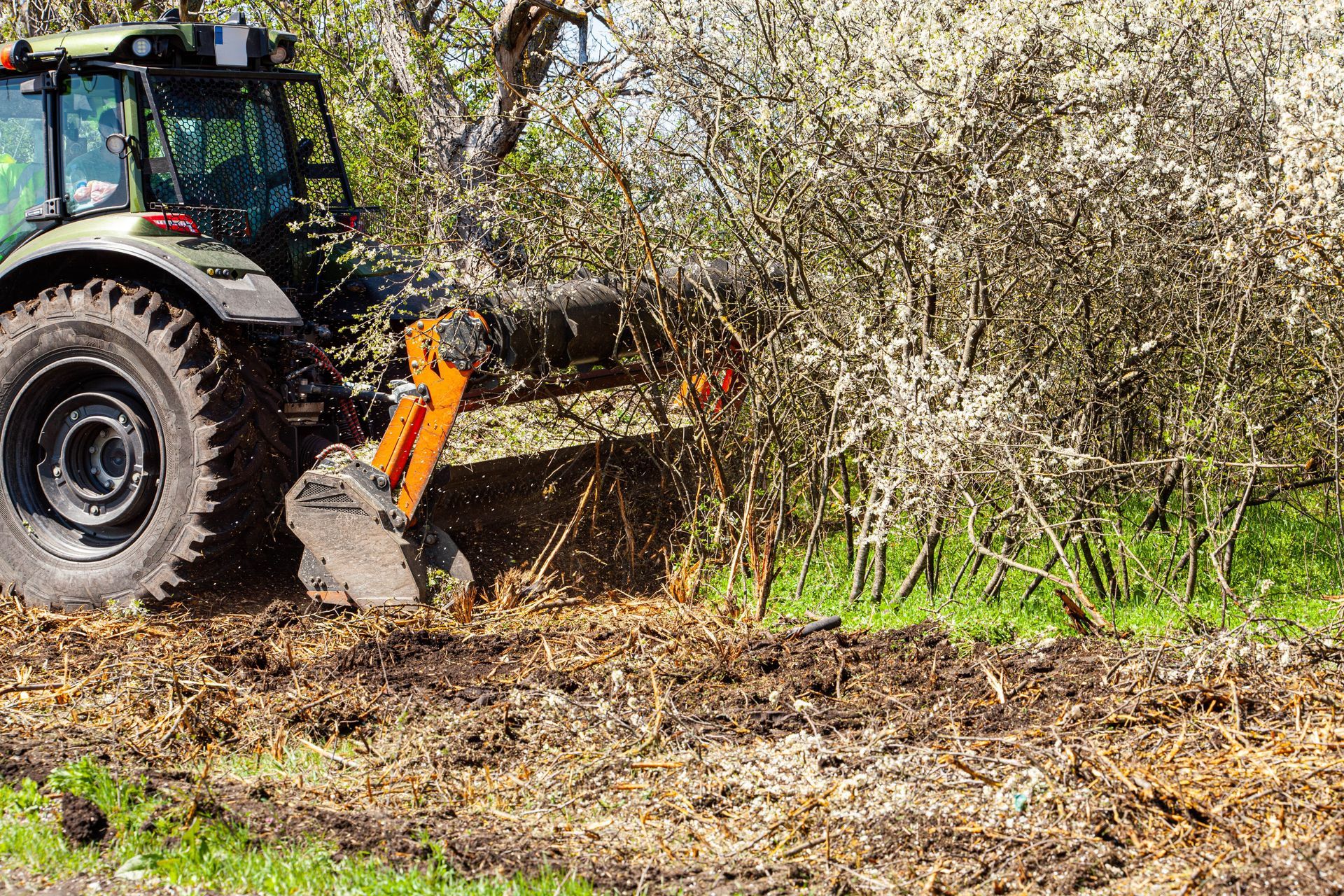
The Difference Between Brush and Lot Clearing
Brush clearing removes undergrowth and small woody vegetation while preserving mature trees and topsoil structure. Lot clearing takes properties to bare ground, removing all vegetation including root masses and stumps when construction plans require flat, obstruction-free sites. Brush removal uses handheld saws and brush mowers for selective work, while lot clearing often involves heavier machinery like forestry mulchers that grind vegetation into chips spread across the cleared area or removed entirely.
Once clearing finishes, your property boundary becomes visible and accessible for surveying, fencing, or landscaping installation. Fire risk drops significantly as dead brush and dense thickets are eliminated, reducing fuel loads that spread wildfires rapidly during dry periods. Construction equipment can access previously overgrown areas without obstruction, and soil testing or foundation work proceeds without delays caused by vegetation removal mid-project.
Property cleanup following clearing includes hauling chipped material and cutting larger wood into transportable sections. Invasive species like buckthorn and honeysuckle require removal below ground level to prevent resprouting, which adds time compared to clearing native brush. Seasonal timing affects how quickly cleared areas revegetate, with fall clearing allowing natural decomposition over winter and spring clearing requiring faster seeding or mulching to prevent erosion during Minnesota's heavy spring rains.
What Property Owners Usually Ask
Clearing projects in Monticello vary based on vegetation type, intended land use, and whether mature trees remain part of the final landscape plan.
What defines brush versus small trees during clearing estimates?
Brush includes shrubs, vines, and multi-stemmed growth under three inches in diameter, while small trees have single trunks between three and six inches, requiring different cutting techniques and disposal methods due to wood density and root structure.
How does overgrown property clearing prepare land for construction?
Clearing removes vegetation and surface roots, exposes grade elevations for accurate surveying, and eliminates obstructions that interfere with excavation equipment, allowing construction to begin without mid-project delays for vegetation removal.
What happens to the debris generated during lot clearing?
Brush and small trees are chipped on-site and either spread as ground cover or hauled away, while larger wood is cut into sections for removal, with the disposal method depending on debris volume and whether you want mulch retained for erosion control.
When should properties be cleared to allow natural decomposition before planting?
Fall clearing allows organic material to break down over winter, enriching soil for spring planting, while late spring clearing requires immediate seeding or mulching to stabilize soil during summer rainstorms common across central Minnesota.
Why does clearing cost vary between similar-sized properties?
Costs reflect vegetation density, species present, whether stumps require grinding, equipment access limitations, and disposal distance, with properties containing invasive species or mature brush requiring more labor than areas with sparse sapling growth.
Lorentz Tree Service LLC clears residential and commercial properties across Monticello, adjusting methods to match your intended use and vegetation conditions. Request an evaluation to review clearing scope and equipment needs for your specific property layout and growth density.